Development

Why Every Business Should Choose a Custom Website Instead of WordPress

July 3, 20265 min read
Why Every Business Should Choose a Custom Website Instead of WordPress

Introduction

If you're planning to build a website for your business, one question will probably come to mind:

Should I choose WordPress or invest in a custom website?

WordPress powers over 40% of websites on the internet, making it a great option for many businesses. It's fast to set up, easy to manage, and has thousands of themes and plugins.

However, as your business grows, you may begin to notice its limitations. Performance issues, plugin conflicts, security concerns, and customization challenges often become part of the experience.

This is where a custom website stands out.

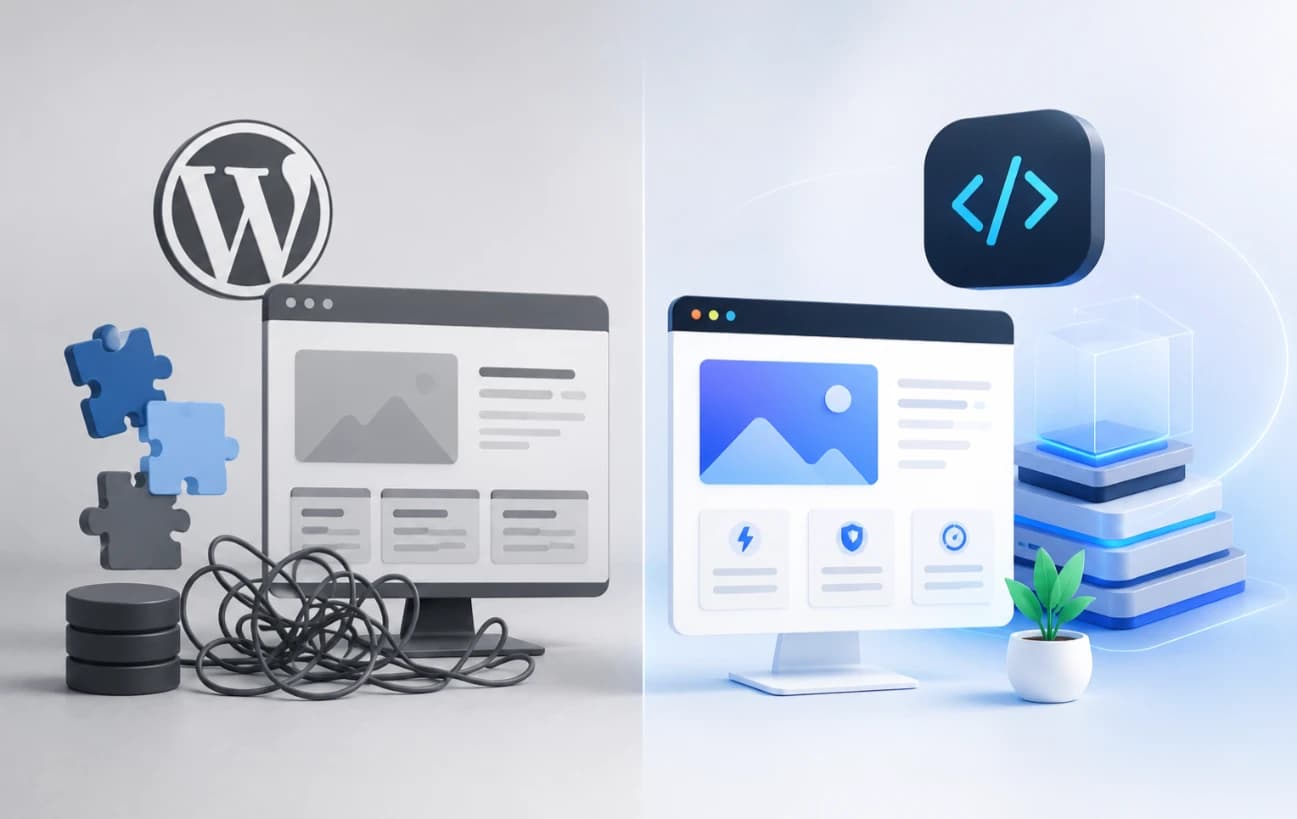
Built with modern technologies like Next.js, NestJS, and PostgreSQL, a custom website gives you complete control over performance, design, security, and future scalability.

In this article, we'll explore ten reasons why a custom website is often the better long-term choice for growing businesses.


What Is a Custom Website?

A custom website is built specifically for your business from the ground up.

Instead of relying on pre-made themes or dozens of plugins, every feature is designed around your business goals.

For example, if your company needs:

  • Customer Dashboard

  • Booking System

  • CRM

  • Inventory Management

  • Client Portal

  • Membership System

A custom solution can include these features in a clean and efficient way without unnecessary code.


1. Better Performance

Website speed matters.

Studies show that visitors leave websites that take too long to load.

Many WordPress websites become slower because they rely on multiple plugins and heavy themes.

A custom website only includes the code you actually need.

That means:

  • Faster page loading

  • Better Core Web Vitals

  • Better user experience

  • Improved Google ranking

A faster website also increases user trust and engagement.


2. Better SEO

Search engines reward websites that are fast, well-structured, and optimized.

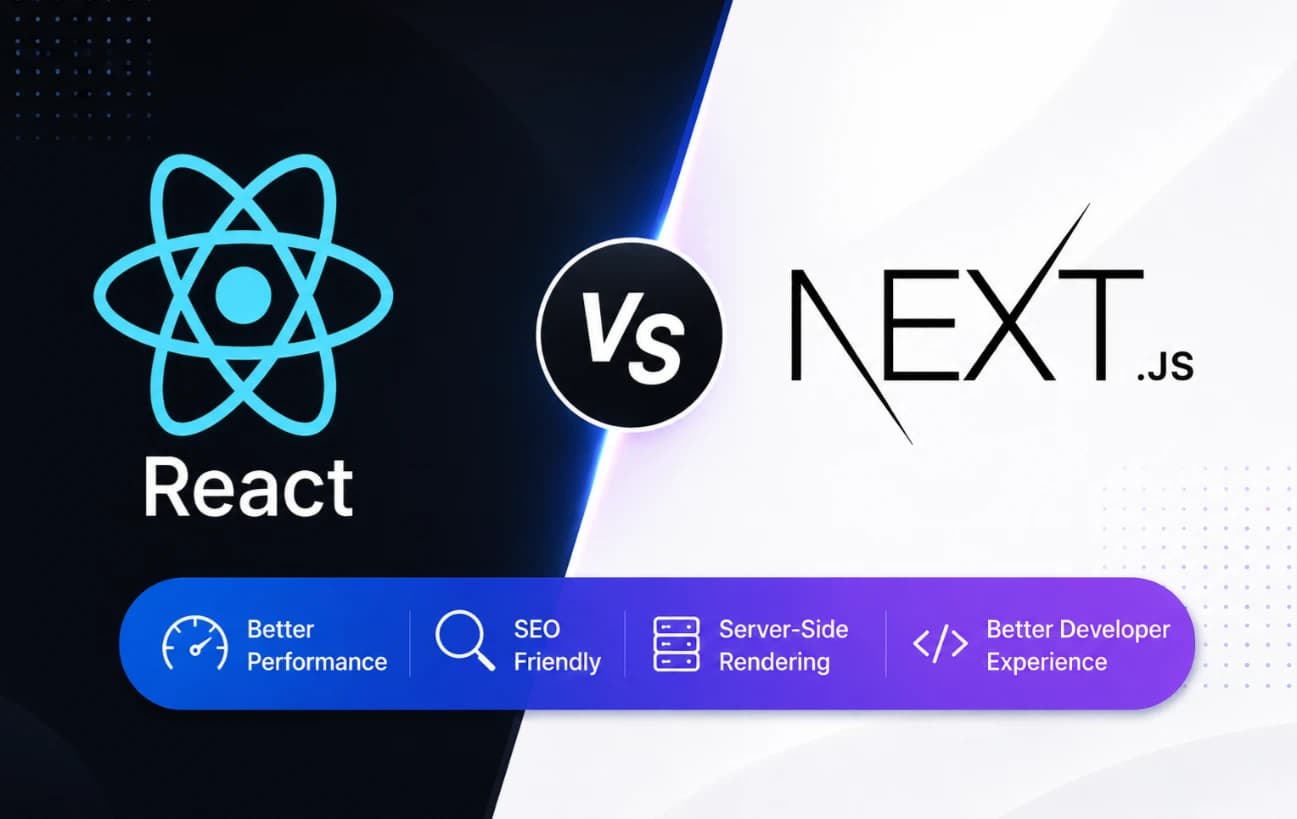
Modern frameworks like Next.js provide built-in SEO features such as:

  • Server-Side Rendering (SSR)

  • Static Site Generation (SSG)

  • Metadata API

  • Open Graph support

  • Sitemap generation

  • Structured data

These features help search engines understand and index your content more effectively.

While WordPress can also be optimized for SEO using plugins, a custom website gives you full control without depending on third-party tools.


3. Unlimited Customization

Every business is different.

With WordPress, you're often limited by what a theme or plugin allows.

If your business needs a unique workflow, you may end up installing multiple plugins or hiring a developer to work around existing limitations.

A custom website removes these restrictions.

You can build exactly what your business needs—from simple forms to advanced business systems.


4. Stronger Security

Security is essential for any business website.

Because WordPress is so widely used, it's also a common target for attackers.

Many security issues come from outdated plugins or themes.

A custom website reduces these risks because:

  • There are fewer third-party dependencies.

  • Only required features are included.

  • Updates are easier to manage.

  • The attack surface is smaller.

This results in a safer and more stable application.


5. Easier to Scale

As your business grows, your website should grow with it.

You might later want to add:

  • Mobile apps

  • Customer dashboard

  • AI features

  • Analytics

  • CRM integration

  • Payment gateways

A custom-built architecture makes adding these features much easier.

You're building on a foundation designed to expand.


6. Better User Experience

Your website is often the first impression customers have of your business.

A custom website allows you to create a user experience that matches your brand.

You can control:

  • Layout

  • Navigation

  • Animations

  • Loading experience

  • Mobile interactions

  • Accessibility

Everything feels more polished because it's built specifically for your audience.


7. No Plugin Dependency

One of the biggest challenges with WordPress is plugin management.

It's common to install many plugins just to add basic functionality.

This can lead to:

  • Compatibility issues

  • Slower performance

  • Frequent updates

  • Unexpected bugs

With a custom website, features are built directly into the application.

You only maintain the code you actually use.


8. Lower Long-Term Maintenance

At first, WordPress may seem like the more affordable option.

However, ongoing costs can add up:

  • Premium themes

  • Paid plugins

  • Plugin renewals

  • Security fixes

  • Performance optimization

  • Compatibility updates

A custom website may require a larger initial investment, but it often reduces maintenance complexity over time.


9. Built for Your Business

Every business has different goals.

A restaurant needs online reservations.

A clinic needs appointment booking.

A startup may need a customer dashboard.

A digital agency may need a project management portal.

Instead of adapting your business to fit a template, a custom website is designed around your workflow.

This creates a smoother experience for both your team and your customers.


10. Future-Proof Technology

Modern technologies continue to evolve rapidly.

Frameworks like Next.js support:

  • AI integration

  • Edge rendering

  • Server Components

  • Streaming

  • Modern APIs

  • Better caching

These capabilities make it easier to adopt new technologies as your business grows.

Investing in a modern tech stack helps keep your website relevant for years to come.


WordPress vs Custom Website

Feature

WordPress

Custom Website

Setup Speed

⭐⭐⭐⭐⭐

⭐⭐⭐

SEO

⭐⭐⭐⭐

⭐⭐⭐⭐⭐

Performance

⭐⭐⭐

⭐⭐⭐⭐⭐

Security

⭐⭐⭐

⭐⭐⭐⭐⭐

Scalability

⭐⭐⭐

⭐⭐⭐⭐⭐

Custom Features

⭐⭐⭐

⭐⭐⭐⭐⭐

Maintenance

⭐⭐⭐

⭐⭐⭐⭐

Long-Term Growth

⭐⭐⭐

⭐⭐⭐⭐⭐


Should You Still Choose WordPress?

Absolutely.

WordPress is still an excellent choice for:

  • Personal blogs

  • Portfolio websites

  • Small business websites

  • Landing pages

  • Company profile sites

  • Simple marketing websites

If your requirements are straightforward, WordPress can be a practical and cost-effective solution.


When Should You Choose a Custom Website?

A custom website is worth considering when you need:

  • Business automation

  • Customer dashboard

  • SaaS platform

  • CRM

  • ERP

  • Booking system

  • Membership portal

  • Marketplace

  • Learning Management System (LMS)

  • Large-scale web application

These projects benefit from the flexibility and scalability of a custom-built solution.


My Perspective

Over the years, I've worked with both WordPress and custom web applications.

WordPress is excellent for getting a website online quickly.

But when a project requires advanced features, better performance, or room to grow, I prefer building with technologies like Next.js, NestJS, and PostgreSQL.

This approach provides more control, cleaner architecture, and a stronger foundation for long-term business growth.

The right choice depends on your business goals—not just today's needs, but where you want to be in the future.


Final Thoughts

There's no single solution that's perfect for every business.

WordPress is ideal for launching simple websites quickly and efficiently.

Custom development shines when your business needs speed, flexibility, security, and scalability.

Before choosing a platform, think beyond the initial launch. Consider how your website will support your business over the next few years.

A well-planned website isn't just an online presence—it's an investment in your company's growth.

Chat with me